
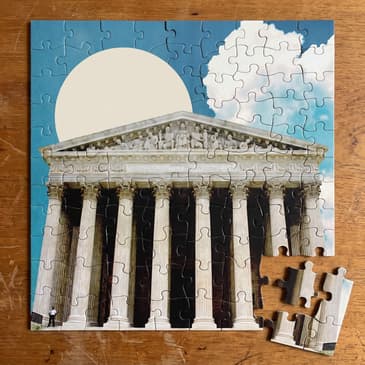
The Court’s latest Voting Rights Act decision, Louisiana v. Callais, narrows Section 2 in a way that could reshape redistricting, weaken majority-minority districts, and intensify the fight over how race and partisanship interact in elections. We unpack what the Court said, what it quietly overruled, and why the reasoning matters far beyond Louisiana.
We walk through the statutory text, the long-running collision between the Voting Rights Act and the Court’s racial gerrymandering cases, and the practical consequences for future election-law litigation. Along the way, we debate whether this is best understood as a textual decision, a constitutional avoidance move, or a major shift in how the Court treats political power and racial representation.
The conversation also covers the Court’s emergency procedural move after judgment, Justice Kagan’s forceful dissent, and the broader question of whether the decision is likely to help one party more than the other in the short run. The result is a sharp, candid look at one of the term’s most consequential rulings
Key Topics
[00:00:20] - Introduction to the episode and SCOTUS Blog partnership update
[00:03:06] - Brief Supreme Court news: mifepristone litigation and shadow-docket timing
[00:05:20] - Louisiana v. Callais and why the case is a major Voting Rights Act decision
[00:11:35] - Voting Rights Act history: Section 2, Section 5, and Shelby County
[00:13:39] - The collision course between racial gerrymandering doctrine and Section 2
[00:16:17] - Allen v. Milligan and how the Court shifted course
[00:21:21] - Procedural background of the Louisiana map challenge
[00:23:02] - Is the decision constitutional, statutory, or both?
[00:24:28] - Section 2’s text and the 1982 amendments
[00:29:14] - The Court’s reading of “less opportunity” and the role of partisanship
[00:41:46] - How the majority treats Allen v. Milligan and prior precedent
[00:43:06] - Constitutional avoidance and the Section 5 enforcement-power question
[00:46:28] - The Court’s “updated” Gingles framework and why that matters
[00:52:29] - Likely effects on majority-minority districts and partisan gerrymandering
[00:54:25] - Justice Kagan’s dissent and the Court’s broader democracy critique
[00:56:04] - The post-judgment timing dispute and Justice Jackson’s separate dissent
[00:58:55] - Final assessment of the decision and its likely consequences
Relevant Links
Rick Pildes's post on the decision: https://democracyproject.org/posts/supreme-court%E2%80%99s-gutting-of-voting-provision-was-long-time-coming
Travis Crum Amicus Brief: https://www.supremecourt.gov/DocketPDF/24/24-109/373625/20250903201226237_2025.09.03%20Callais%20Crum%20Amicus%20Brief.pdf
[00:00:20] [Dan] Welcome to Divided Argument, an unscheduled, unpredictable Supreme Court podcast. I'm Dan Epps.
[00:00:25] [Will] And I'm Will Baude.
[00:00:27] [Dan] So, Will, we are now in our third episode, I think, in this SCOTUSblog partnership. So hopefully, we continue to have a new stream of listeners. And this episode, we're gonna talk about a higher profile case, so maybe this will this will bring in some new folks. So if you're new to the show, I'm sorry. I don't I don't really know what else to say to people who are new to new to the show.
[00:00:52] [Will] So last time, I think we managed to not talk about our principal cases until, about twenty minutes and forty minutes into the hour long recording. So let's surprise people by
[00:01:01] [Dan] Yeah. I think we're gonna talk about very little other than our principal case. But you said you had two quick things you wanted to flag for people?
[00:01:10] [Will] Yes. Two quick things. Some people have complained in the comment section on the Divided Argument blog where I encourage people to comment on and discuss our episodes that we did not talk about Justice Thomas's recent remarks about progressivism. I have not listened to these remarks. They are somewhere in my listening queue, but I confess listening to the new episodes about the new Magic the Gathering set has been a higher priority for me, and I still haven't made it all the way through the walkthrough of the new Strixhaven set.
[00:01:39] [Will] So I'm behind on that, but I hear that it was controversial.
[00:01:43] [Dan] Okay. I have not listened either. I I think we probably should and speak about it at some point. Well, although I know you you don't love kind of Supreme Court it's not really an ethics issue, but it's kinda feel like it's kind of in the same universe of kinda criticizing the judges for their extracurricular activities. It's not your favorite.
[00:02:05] [Will] It'll be more interesting than our than our usual ethics conversations, maybe. I haven't heard the talk. Maybe the talk is boring.
[00:02:11] [Dan] Okay. Well, yeah, maybe we can I was trying to find a transcript of it because I don't really wanna sit there and I'm not a I'm not a, like, a video person?
[00:02:21] [Will] No. But you can play videos and just put the phone in your pocket and listen to
[00:02:24] [Dan] all that stuff. It's kinda hard to do in the car. Do you know you know that YouTube is the the main place the the primary driver of people's discovery of podcasts?
[00:02:34] [Will] Yes. When I did my other podcast side hustle last summer for the university, we get to do the whole thing on YouTube with, you know, professional studio and the whole
[00:02:43] [Dan] whole People are just like kind of sitting there, like staring at the screen. I just I don't get it.
[00:02:49] [Will] Well, it's all it's all on their phones, so you can.
[00:02:52] [Dan] Okay.
[00:02:52] [Will] They're probably driving and eating lunch or something. Then why
[00:02:55] [Dan] do you care about the video if you're driving? Hopefully, you're not watching it.
[00:02:57] [Will] I think a lot of people watch videos when they drive down.
[00:02:59] [Dan] Self driving cars cannot come fast enough. Okay. So that was one of two things down, I think.
[00:03:06] [Will] Yeah. Second thing, briefly, there is a a new Mifepristone showdown from the Fifth Circuit and the Supreme Court. Recall the Supreme Court had this case a couple of years ago with the Fifth Circuit, tried to take mifepristone off the market, and the US Supreme Court said that the doctors in question did not have standing. Now they're back with a state. And, again, the Fifth Circuit or, actually, this time, the Fifth Circuit ruled and refused to stay the ruling at all, and now the whole thing is at the Supreme Court with an administrative stay by Justice Alito.
[00:03:38] [Will] Some people complained that Justice Alito took twenty four hours or forty eight hours to issue the administrative stay, so there's apparently quite a bit of chaos while that happened. Not sure why that is. And we don't have anything to talk about yet, but just putting that on our on our radar.
[00:03:52] [Dan] Okay. And so it sounds like there's a good chance. This may turn into a merits case. One of the rare merits cases that the Supreme Court decides every term.
[00:04:03] [Will] Yeah. Or quasi merits. Like, what do you call CASA? Which, like, technically never made it off the interim docket.
[00:04:07] [Dan] Yeah. It's not it's not a merits case.
[00:04:09] [Will] Okay. I mean, there was like an oral argument and a long opinion. But still. If they'd asked for briefs in addition to the oral argument and long opinion, then it would become a merits case. Because then it would is it granted cert before judgment?
[00:04:21] [Dan] Well, sure. If they did that for you know? But if it's still just a ruling on an interim order
[00:04:28] [Will] Okay. Okay.
[00:04:29] [Dan] I think it's not I think it's not merits.
[00:04:31] [Will] Okay. It's precedential though. Right?
[00:04:33] [Dan] Oh, yeah. But but so are all the shadow docket things. Right? That's what we've been told.
[00:04:38] [Will] Well, those were told are only sort of precedential.
[00:04:41] [Dan] I mean, lower courts are supposed to, like, read tea leaves even if they don't say anything and, like
[00:04:46] [Will] Right. Lower courts are supposed to exercise their jurisdiction in, fashion or whatever. Yeah. Okay. Alright.
[00:04:51] [Will] So we have a merits case to talk about.
[00:04:53] [Dan] Two things. Two things I said no.
[00:04:55] [Will] So last week, the Supreme Court decided Louisiana versus '97 I call it Callais. I think the chief may have called it Callais. Do you have a view about how to pronounce?
[00:05:08] [Dan] I do not. K. I think in theory, the chief does a little bit of work to try to say the correct pronunciation, but I'm not sure he always gets it right. K. Let's move to side
[00:05:20] [Will] of Louisiana versus Callais, a case about the meaning and constitutionality of Section 2 of the Voting Rights Act, which was argued last year, held over for reargument at the start of the term. And finally, you know, eighteen months after an initial argument has has made it to a decision.
[00:05:43] [Dan] Yeah. I know. And in classic fashion with the way this show goes, the decision came down like, I think a few hours before we released our last episode.
[00:05:57] [Will] Yes.
[00:05:58] [Dan] Making it instantly irrelevant. No. Not irrelevant, but not the thing people are most interested in.
[00:06:05] [Will] We're always relevant to end even if we're not timely.
[00:06:08] [Dan] We're always relevant to something. The question is relevant to what? So this is a big one. Yes. I think this is a huge one.
[00:06:17] [Dan] Yes. You know, when it's all said and done, I think this will still be, you know, one of the biggest decisions of the term.
[00:06:27] [Will] Yes. You
[00:06:29] [Dan] know, not the biggest, but but Well, know,
[00:06:32] [Will] Sarah Isgur, friend of the pod and SCOTUSblog majordomo, so partner of the pod.'a0
[00:06:35] [Dan] Majordoma.'a0
[00:06:37] [Will] Major doma. Major dame.
[00:06:40] [Dan] Is is that a is that a gendered noun?
[00:06:44] [Will] I don't see gender, Dan. She's made the point several times that also, like, which cases count as big are kind of constructed in a couple of ways. That there are cases that that don't get called big if they're eight one or unanimous, but are big if they're six three. Yeah. And also sometimes cases that are called big if they come out one way, but not big if they come out the other way, which actually makes sense.
[00:07:07] [Will] If it's like Mhmm. This is a to do x would have been a totally unprecedented upheaval in the law that it's a big case if the court does x. To reject x may not be big. Yeah. So, like, if the Supreme Court decides birthright citizenship, you know, on a seven two ruling doing the thing that it obviously should and will do, that'll still be a big case at this point.
[00:07:27] [Dan] Still big. Yeah. That's huge.
[00:07:28] [Will] But not nearly as big as if it were five four ruling if it were the Trump administration. Right? Which case it would be.
[00:07:34] [Dan] I guess so. But to the extent that the the claim that ZERO was responding to is that in the big cases, the court is always partisan, I think that will still be used and used correctly as a data point in the other direction. Right? This is a really huge high stakes thing where the court, as you predict, as many predict, you know, did not strictly break on partisan lines.
[00:08:01] [Will] Yes. I think so. But for instance, there are other immigration cases pending with the revocation of temporary protective status and the remain in Mexico policy.
[00:08:09] [Dan] Mhmm.
[00:08:10] [Will] And it seems like the discourse has not yet decided if those are big cases. Yeah. But I would predict if either of them are six three wins for the Trump administration, they will
[00:08:19] [Dan] They will be embiggend?
[00:08:21] [Will] They will join the roster of big outrageous partisan things the court is doing, but if they're unanimous victories of the Trump administration or, you know, etcetera. So, you know.
[00:08:31] [Dan] Can I just test out a a claim that we will, you know, we're not gonna resolve in this moment, but but maybe it will guide some of the stuff we think about, which is that put aside the claim about big versus small? But my claim would be that in the cases that most directly implicate political power, like the underlying balance of political power, power in the political system Mhmm. The court is much much much more likely to break on purely partisan lines.
[00:09:08] [Will] Not sure. Mhmm.
[00:09:10] [Dan] I didn't I thought you'd be unsure.
[00:09:13] [Will] Like, let's just take cases about election law. Mhmm. I do think maybe election law cases are more likely to have an ideological valence than a lot of other cases the court takes. On the other hand, sometimes the partisan effect of election law cases is actually confusing. Even even when in the case, like, of the two sides is the party, the net effect of the party is just confusing.
[00:09:35] [Will] Like, they have a case about the constitutionality of the of BICRA, the Campaign of Finance Reform Act, where Ramon Martinez is defending the direction below. You could call that a case that directly implicates the political power because it's like the Republican Party versus the law, but the net effect is unclear. So I
[00:09:52] [Dan] It has a clear valence. Right? I mean, that's Well Republicans are against that stuff, and Democrats are are still largely for it.
[00:09:59] [Will] Well, they are, but it's not clear they should it's not clear like, Democrats might just be self owning. I mean, even, like, the VRA case we're about to talk about is obviously seen as a partisan case where the Republicans win and the minorities and Democrats lose. If you read the the literature by election professors or, like, the recent post by Rick Pildes, the net view is unclear. I recently asked a bunch of election law professors, like, what is the partisan effect? And was kind of gently scolded for, like, asking that when law professors obviously aren't good at figuring that out.
[00:10:33] [Will] So Is the court good
[00:10:35] [Dan] at figuring stuff like that out? Maybe not.
[00:10:37] [Will] So so, you know, I also I recently had an argument about this with somebody else who's, you know, called this a political opinion. And I said or, you know, called the court's decision partisan, and I said, well, what's the partisan effect? And I got him to admit the partisan effect is unclear. And he said, well, I just said it was a partisan decision. I didn't say it had a partisan effect.
[00:10:53] [Dan] So I I will say something could be a partisan decision if the court itself is operating on naive assumptions about the partisan effects of that decision.
[00:11:04] [Will] Absolutely. Could be. It could be. Or it could be the court is not even really making an effect based analysis, but just like, you know, like many people do, like sort of an identity teams based analysis. Mhmm.
[00:11:14] [Will] You just think like, oh, our team likes this, so we vote for it. It could be our whole team is actually over indexing or whatever. Anyway, this is getting ahead of maybe the actual decision, so maybe we should talk
[00:11:26] [Dan] about supposed to talk about the actual decision. Yeah. There's unfortunately a fair number of moving pieces here to even set up the issue in this case.
[00:11:35] [Will] That's true. I think there are so one moving piece is the Voting Rights Act, which was enacted in 1965, but the crucial part of its section two was amended in 1982.
[00:11:48] [Dan] Crucial for this case, not Crucial
[00:11:49] [Will] for this case. Crucial overall. Both. I mean Yeah. The other most crucial part of the Voting Rights Act, section five, was effectively but not technically invalidated in Shelby County versus Holder.
[00:11:59] [Will] And, you know, I didn't even put it on my election law syllabus last year because I tried only teaching living law.
[00:12:05] [Dan] So why wait. What was remind me why it was not technically
[00:12:09] [Will] No. Technically, the court invalidated the section four coverage formula that determines what section five applies to.
[00:12:15] [Dan] Yeah. But, I mean, it did invalidate it.
[00:12:17] [Will] Well, it invalidated the coverage formula. Yeah. Yeah. It left open the possibility that section five could validly apply if there were a new coverage formula.
[00:12:25] [Dan] But that would require
[00:12:26] [Will] That require a statute.
[00:12:28] [Dan] Yeah. I mean, so so basically, I mean, you took out a load bearing piece of the statute. So I I feel like that Yeah. But I mean, that gets rid of the whole thing.
[00:12:38] [Will] Well, right. But it also, as a matter of congressional power, the fact that Congress might still have the power to impose the restrictions in section five if it were to impose them in the correct jurisdictions is just a different and more modest holding than the view that they can't do that at all.
[00:12:51] [Dan] Okay. So so that was a big piece of Voting Rights Act.
[00:12:55] [Will] Right. Section two is the other big piece. It's the main voting rights provision. And in 1982, the Supreme Court amended it to say
[00:13:02] [Dan] The Supreme Court doesn't amend statutes. Sorry.
[00:13:05] [Will] In 1982, Congress amended the statute to say that things that have a discriminatory effect on the right to vote are invalid, not just things that have a discriminatory intent. That statute has been interpreted for forty five years.
[00:13:22] [Dan] Yeah. I mean, although the language is a bit more
[00:13:24] [Will] It's much more complicated. We'll get there.
[00:13:26] [Dan] I think that you're doing a a paraphrase that is maybe not the paraphrase that the court itself is gonna agree with. Correct?
[00:13:32] [Will] I think the court will agree with my paraphrase, but I agree the text is actually important that we should get into it, but just in terms of the moving parts, that's one moving part. Yeah.
[00:13:39] [Dan] So there's the amendment.
[00:13:41] [Will] And then this case is the collision course of two moving parts in the court's precedents. One of which is an interpretation of the fourteenth and fifteenth amendments, starting with a case called Shaw versus Reno that says race discrimination, including basically affirmative action in redistricting, is presumptively unconstitutional. Taking race into account too much, even if you're taking race into account too much to help black voters get more power, is subject to scrutiny. That's one line of cases. It's been going on for thirty years, very controversial, started by Justice O'Connor.
[00:14:15] [Will] The other line of cases are cases under the Voting Rights Act that say that in many cases, the Voting Rights Act requires you to draw a district where there will be a majority of African Americans or Hispanics so that they have a opportunity to elect an African American or Hispanic, either a representative who is themselves of that race or who is the the candidate of choice of that group, even if they're not of that race. And those two things have been on a sort of gentle collision course for several decades.
[00:14:44] [Dan] But I mean, those sound contradictory. Right? You cannot consider race. You must consider race.
[00:14:50] [Will] Right. Well, it's you it's you know, the the shock cases don't say you can't consider race. They just say considering race is very bad and hard to justify, and we don't like it. Mhmm. And the Voting Rights Act doesn't quite say you have to draw these majority of minority districts, but it does say, in many cases, the failure to draw them which has been interpreted to say, in many cases, the failure to draw them produces a violation.
[00:15:10] [Dan] And I guess the way the way the needle had been threaded in the past was to say, you're not supposed to consider race without a really good reason, but section two is a really good reason.
[00:15:19] [Will] While the other way it had been threaded was to interpret section two very narrowly. So I think I think since 1982, the total number of cases where the Supreme Court has found a violation of section to the Voting Rights Act is like one, LULAC versus Perry maybe twenty years ago. Maybe that's not the one I'm forgetting about. But so so you get the you solve the collision course on both ends by saying, well, maybe if you really, really have to, you could. And also, the Supreme Court at least lots of lower courts have found violations, but the Supreme Court at least might say, actually, you don't have to hear.
[00:15:50] [Dan] And so Allen versus Milligan, maybe is this getting too far ahead of time? Or do you do you wanna do you wanna wait till till that one? You have a you have a road map, it sounds like.
[00:16:00] [Will] No. Go ahead. That's that and that's enough to get on the table. That's that's, like, to get our basic collision course.
[00:16:05] [Dan] Okay. So that's a 2003 decision.
[00:16:09] [Will] Alan versus Milligan is a 2023 decision.
[00:16:11] [Dan] Yes. Sorry. That's what that's what I meant. 2023 decision, so three years ago.
[00:16:17] [Will] Yep.
[00:16:17] [Dan] That's interpreted I mean, so so can you just clarify what you just said in light of Allen versus Milligan? So you said there's only one case where the court had found a violation of section two. Allen versus Milligan is a case at least where the court said that section two did require the creation of a
[00:16:39] [Will] No. You're right. Allen versus Milligan, I think, would be the second case. Yeah. So I was I was I was out of date.
[00:16:47] [Dan] Okay. So so that case, yeah, said that in Allen Allen versus Milligan, I think it was Alabama. Right? Yes. Alabama had to create a second majority minority district that that that was required by Section 2 of the Voting Rights Act.
[00:17:03] [Dan] Yes. I found that a somewhat striking result. I think at the time I tweeted and maybe said on the show that it it it did break my paradigm a little bit of, you know, consistent predictions in favor of partisan alignment in these these kind of like the the structure structure of power, you know, political power cases. There was an opinion by chief Justice Roberts with the liberals and Kavanaugh. Yes.
[00:17:37] [Dan] So kind of surprising.
[00:17:39] [Will] Right. And so Allen versus Milligan was basically the same collision course teeing up the same question as in Callais. And in Allen versus Milligan, Justice Kavanaugh, Justice Roberts swerved the car, so to speak. Yeah. With Justice Kavanaugh writing separately to say, oh, well, we can't do this forever.
[00:17:55] [Will] And basically
[00:17:57] [Dan] Still still not disclaiming the fact that in his view, there was a constitutional problem, this coalition course.
[00:18:03] [Will] Right. Although right. Basically not disclaiming, yeah, the problem. And in Callais, the court has now sort of essentially overruled Allen versus Milligan. It claims otherwise, but I think it Yeah.
[00:18:15] [Will] Basically did. And I think, basically, Allen versus Milligan was not very well briefed on behalf of the anti VRA folks. And this time around, largely because the solicitor general's office now enters to a Republican president rather than Democratic president, the solicitor general's office wrote a very good brief providing a better road map for the this side of the collision course, and so the court could could do a better job, which is striking, I think, that the briefing at this stage still matters. But this is a complicated area of law where I think the court does need some help.
[00:18:46] [Dan] Okay.
[00:18:48] [Will] So there are two ways to resolve the collision course. Well, no. There are many ways to resolve the collision course. But one thing you could say is, oh, the Voting Rights Act is unconstitutional. Yep.
[00:18:59] [Will] The court did not say that in Allen versus Milligan, and it does not say that in Clay. Yeah. A different different thing you could instead say is the Voting Rights Act is not unconstitutional because it turns out it doesn't require what we have said it required for a long time, so the collision course is solved by essentially the Voting Rights Act swerving.
[00:19:19] [Dan] Yeah. And then a third option would have just been to say, no, the the Voting Rights Act does require this. And it's fine. That's a good reason. That's Yes.
[00:19:27] [Dan] That overcomes the, you know, fourteenth amendment.
[00:19:30] [Will] Right. Or relatedly to say, well, Shaw versus Reno was wrong. Say there is even a problem here. The voting rights act is correct, and Shaw versus Reno is wrong. Yeah.
[00:19:39] [Will] Slightly strangely, also, Justice Thomas had recently said that he thought Shaw versus Reno was wrong and these race discrimination cases were all incorrect. He appears to have forgotten about that.
[00:19:50] [Dan] Yeah.
[00:19:51] [Will] And it's back to I mean, he has a different idiosyncratic view as well that the Voting Rights Act doesn't apply to district at all. Yeah. So for Justice Thomas, the there is no there is only one car, and it's pointed in a different direction. But
[00:20:02] [Dan] Yeah. And I I will just give a shout out at the outset to an amicus brief for which I was co counsel, the amicus brief of my colleague professor Travis Crum, who is the foremost authority, I think I can say, on the fifteenth amendment, arguing that the fourteenth amendment was never supposed to govern redistricting at all and that it was purely supposed to be governed by the fifteenth amendment based on a ton of historical evidence, and that going on to say, you know, that that Congress has fifteenth amendment enforcement authority to enact, you know, the the section two more broadly construed. That didn't seem to get traction here, doesn't get a sight, but I thought it was an outstanding brief to which my contribution was small and Travis's contribution was, you know, the contribution. So alas.
[00:20:55] [Will] Alas. Okay. So that's where we are. What do you think of the spin it in? I'm guessing you are a skeptic.
[00:21:03] [Dan] That's that's not quite where we are. Oh, okay. We did do we need to explain how this the procedural history of the different cases or not? Or do you were you do you think we can just skip that?
[00:21:13] [Will] I don't think we need to get into it right now.
[00:21:15] [Dan] Okay. I mean, basically, think what you can say is earlier, the state of Louisiana had been ordered to produce a second majority minority district.
[00:21:27] [Will] Under the Voting Rights Act.
[00:21:28] [Dan] Under the Voting Rights Act, which they did. Yep. And then that was challenged under the Shaw fourteenth amendment racial gerrymandering line, and then they were defending it, and then the court asked for further briefing on the larger question. The state flipped and now says, you know, we agree that we shouldn't have to do this, and then the court is going to
[00:21:50] [Will] Agree. They don't have to do it.
[00:21:51] [Dan] Yeah. By by, as you say, swerving.
[00:21:54] [Will] Right. And because they don't have to do it, they therefore can't do it. Right? Because the whole setup is the tension between the Shaw Yeah. The race discrimination rule and the Voting Rights Act rule, Anything that is any majority in our district that is not required by the Voting Rights Act is forbidden Yeah.
[00:22:10] [Will] By Shaw.
[00:22:12] [Dan] Okay. What do I think? I think I don't like this opinion at all. I think it's in this majority, we've got this is a classic partisan breakdown. We've got a majority opinion by Justice Alito.
[00:22:23] [Dan] We've got a 48 page dissent by Justice Kagan. All the usual suspects joining the opinions that you would expect. I don't think this is a great opinion by Justice Alito. I think it's a very bad result. I think it's I found the opinion somewhat dishonest in various places, but we can try to get there.
[00:22:44] [Dan] But let's just I guess, before we editorialize too much, let's try to understand a little bit more about what this opinion does. So first of all, is this a constitutional decision, or is this just a purely statutory decision?
[00:22:56] [Will] Well, the opinion says that it's a constitutional decision.
[00:23:00] [Dan] Mhmm.
[00:23:02] [Will] Much of the opinion is about the statute. I think so I think the right way to just formally, right way to think about it is it a is it a constitutional decision, and it is mostly an opinion of what the Voting Rights Act means. But it is constitutional in two senses. One is the entire case is premised on a Shaw claim. Like, the Voting Rights Act only comes in as a defense to a Shaw claim.
[00:23:23] [Will] So formally, part of the holding of the case, I think, is that this district is unconstitutional because it's not required with the Voting Rights Act. Now most of opinion is about the because, the main Voting Rights Act, but and then second, one of the court's reasons for interpreting the Voting Rights Act the way it does is a constitutional avoidance holding, basically, that were we to interpret the Voting Rights Act otherwise, the way we have for the past forty years, they would exceed Congress's power under section two of the fifteenth amendment under Boerne versus Flores and cases like that. But part of the opinion is just about sort of reunderstanding what the Voting Rights Act means, which I think might be the best part of the opinion. So can we talk about the text of the Voting Rights Act for a minute?
[00:24:06] [Dan] Okay. Text, will say, text is not great in the sense that the text is extremely poorly written and confusing, or at least I I think perhaps deliberately so. Right? Right. As a result of a of a kind of political disagreement in Congress and they kind of seem to have chosen language.
[00:24:28] [Dan] It's a bit of a muddle to resolve that political And and so just to be clear, that the way that this this statute was written, I mean, they amended the Voting Rights Act in direct response to a Supreme Court decision that said that, you know, section two basically for redistricting or section two only applies to things that are motivated by discriminatory purpose Right. If they're facially neutral. And so Congress I think you'll agree Congress was trying to change that.
[00:25:00] [Will] Right. There there were several different cases, at least one of which Mobile versus Bolton, Congress was trying to effectively overrule. There is some dispute whether they were also trying to overrule some other cases that were sort of like intent effects hybrids. So the one part of it says, no voting qualification or prerequisite to voting or standard practice or procedure, let's just say no voting rule, shall be imposed or applied by any state in a manner which results in a denial or abridgment of the right of any citizen in the United States to vote on account of race. So that's the results test.
[00:25:36] [Dan] Okay. So results, not intent. Right.
[00:25:39] [Will] And then this is why it's not fair to call it a badly drafted statute exactly. Like, they could have stopped there, but then they have a second section that attempts to explain what sub that first subsection means. And it says, a violation of subsection a is established if, based on the totality of the circumstances, it is shown that the political processes leading to nomination or election in the state or political subdivision are not equally open to participation by members or class of citizens protected by subsection a. In that, its members have less opportunity than other members of the electorate to participate in the political process and elect representatives of their choice. So now we've got, like, a thing we're looking for.
[00:26:16] [Will] Right? Equal opportunity to participate. And then they give you more help. The extent to which members of a protected class have been elected to office in the state or political subdivision is one circumstance which may be considered, provided that nothing in this section establishes a right to have members of a protected class elected in numbers equal to their proportion in the population.
[00:26:37] [Dan] Okay. And this is sort of the the splitting the the difference here. I mean, some I think it was senator Orrin Hatch was worried that amending section two would require some kind of proportional representation, so they didn't do that. They put that last bit of language in. But at the same time, I think given the context, given the language, it it does seem like this was a statute aimed at not just intentional discrimination, but aimed at the results.
[00:27:08] [Dan] Yes. Right. Some kind of effects based provisions. Right.
[00:27:12] [Will] Exactly. And I mean, and it's tricky in that sort of what is a sort of robust effects based discrimination jurisprudence? It's just something that the court has rarely had to work out outside of the context of the Voting Rights Act. Right? In the constitutional cases
[00:27:28] [Dan] because it says it's not there is no, you know, effects test. Right?
[00:27:31] [Will] Right. Constitutional In cases, the court is an intent test. In some areas, you know, civil rights law, we have various disparate impact standards that are often kind of, you know, built out, but often end up looking, you know, for some kind of intent in the background. And so this, you know, what what counts as a discriminatory effect is a little hard to figure out. One natural thing it could mean is proportionality.
[00:27:52] [Will] Like, Louisiana is one third black, and so it should presumptively have a one third black congressional delegation. And that's the one thing that we're told the statute doesn't mean. Although, of course, the reason that proviso was inserted is exactly because that would have been a natural reading of the statute without the proviso. So it's a little that's the sense of which it's badly drafted, but, again, intentionally drafted.
[00:28:13] [Dan] And the court says, Justice Alito says, this is not the easiest language to parse. Therefore, we will break it down in steps.
[00:28:21] [Will] Yeah. It is I mean, again, it is it is kind of amazing that they here they were. This amendment was a big deal. They get together a political coalition to pass the amendment. They get together a political coalition to, like, define their terms.
[00:28:32] [Will] And the definition they come up with is a totality of the circumstances that show that the processes are equally open. It's it's amazing.
[00:28:40] [Dan] Although, I mean, this is more than forty years ago. This was a period where textualism had not taken hold. Justice Scalia was not on the court. And I think there was reason for people in Congress to expect, look, you know, we don't have to be super clear. The court is gonna figure it out and, you know, we can enact some kind of broad guideposts, and then otherwise, we're kind of punting this to the courts to figure out.
[00:29:07] [Dan] And that's not how courts think about it today.
[00:29:10] [Will] So let me propose to you what I think is the most natural understanding of this language.
[00:29:14] [Dan] Okay.
[00:29:15] [Will] Which is that black voters or other minority voters should have an equal opportunity to participate and elect their candidates of choice as other similarly situated voters. Right? And not based on intent, which is when looking at the effects, like and then the question just is, who counts as similarly situated? And the at the time that the certainly, the time that 1965 Voting Rights Act was enacted and to some extent still in the eighties, in the early eighties, the South was often a one party jurisdiction. But now there are two parties.
[00:29:48] [Will] And so if you have a black Democrat, one obvious comparator will be a white Democrat. Yeah. And so you might say, look, in this state, Democrats never get elected because the Republicans are in charge, they have a majority, and they've gerrymandered all the Democrats out of power. And black Democrats have just as much of an opportunity to participate as other people who are similarly situated, namely white Democrats, which is to say none. Yeah.
[00:30:16] [Will] I think that's basically that's the statute, that's basically the statutory reasoning of the court in Callais, is to say, in thinking about who counts as similar, have to take into account partisanship. After Rucho, partisan gerrymandering is nonjusticiable, and Justice Alito thinks totally fine and totally cool. Yeah. And so if it's partisan gerrymandering that leads to an absence of black representation, As long as it also leads to an absence of white Democrat representation, what's the problem?
[00:30:46] [Dan] Yeah. And that that is an interesting thing. This is just a side note about how this opinion talks about gerrymandering, which is, you know, like as like you said in Rucho, the court sort of said, look, you know, whether this is a problem or not, this is just not something courts can do about it. At times, this opinion almost seems to, like, extol partisan gerrymandering Yes. Which I find somewhat odious.
[00:31:09] [Dan] But but yeah. I mean, so we have a world of high polarization along race. Although and maybe maybe there's some evidence that that's changing.
[00:31:20] [Will] I mean, I think there's a lot of evidence that party polarization now dwarfs racial polarization in most parts of the United States.
[00:31:26] [Dan] Yes.
[00:31:27] [Will] Even like at the level of personal animus, if you poll, you know, parents about whether they would mind if their kid married somebody of a different race, the level of disapproval is way lower than if they would mind if their kid married to a different party.
[00:31:40] [Dan] Yeah. But so in a world where there is high racial partisan correlation Right. This opinion, you know, you could look at legislative attempts to, you know, diminish the legislative attempts to diminish the power of one political party would also look very similar to legislative attempts to diminish the power of one racial block.
[00:32:06] [Will] What do they look so similar, though? So I guess that was again, what in the old regime, in the, you know, the Jim Crow South, part of the issue also was that, like, there was no party that was open to African Americans. So if, you know, if you're being shut out, if you're if your party was being germented out Yeah. As an African American, you weren't really invited to come join the party. If it's the case, and it's an imperial question, that the Republican Party is happy to welcome black Republicans.
[00:32:31] [Will] They wanna show up in the primary and vote for their candidates if you you know, great. If it's the case that the Republican Party is happy to welcome African Americans so long as they become MAGA, then then it is partisans doing the work, right, not race.
[00:32:49] [Dan] Yes. Although, again, you know, the I think it is nonetheless true that there is still a very high correlation. Right? It's not perfect. Right.
[00:32:57] [Dan] Well, the political gerrymandering seems in in effect inconsistent with creating districts where minorities are likely to be able to elect their preferred candidate as a as a whole. Even if individual individual members of that racial group can switch parties or whatever? So I think
[00:33:18] [Will] it depends on the group and on the state. So I think for instance, there are more Hispanic Republicans than black Republicans. Enough enough that I think in Texas, there are some majority minority districts that elect, you know, Hispanic Republican candidates. So there's no inconsistency there.
[00:33:34] [Dan] Is there any majority black district that elects Republicans?
[00:33:37] [Will] I don't know of one. Not to my knowledge. But maybe this will be the catalyst to find one.
[00:33:43] [Dan] Okay. But so can we just clarify the textual reading? Yeah. Okay. So step one is the court is just gonna take as a given that this statute applies to redistricting, which is not obvious.
[00:33:59] [Dan] Right? Justice Thomas has a concurrence where he says, look, this is not the right way to read the statute at all. It shouldn't even apply here. And it's not obvious if you look at this language. Standard practice or procedure, right, you might interpret that as not applying to, like, the drawing of district lines.
[00:34:16] [Dan] But that's court has previously assumed that. Yeah.
[00:34:19] [Will] Right. And it held I mean, the court had held that before 1982. So Yeah. Congress was assume Congress was assuming that.
[00:34:26] [Dan] Yeah. So that that that has very deep roots.
[00:34:29] [Will] Yes. Okay.
[00:34:31] [Dan] So then we have to look at b Mhmm. To determine when a denial or abridgment of the right to vote on account of race or color occurs. Yes. And this is the key part.
[00:34:49] [Will] Yes. Okay. And so this is where we ask if based on the talent of the circumstances, the political processes are not equally open to participation by members or class of citizens in that its members have less opportunity than other members to participate in the political process and to elect representatives of their choice. And I take it, participate in the political process, nobody really contests in these cases. The the question is elect representatives of their choice.
[00:35:12] [Will] Yeah. The argument for majority of our districts is black people will never get to elect their representative of their choice unless you give them a district where there are a ton of black people who can vote for somebody who they like. Yeah. And the argument in response is there are lots of different categories of people who don't get to elect their representative of their choice because they're in the minority. And as long as an African American minority is not being disfavored any more than any other kind of minority like white Democrats, then they have an equal opportunity even if it's a bad opportunity.
[00:35:45] [Dan] Yeah. And then so I think this part's a little confusing to me. The court elsewhere seems to deny or at least not embrace that what it's doing here is applying an intent standard.
[00:36:05] [Will] Yes. So
[00:36:06] [Dan] It it is. Right? Like
[00:36:09] [Will] So so I think the best part of the opinion is that it reaches a probably the best understanding of the statute's text. Now, not what forty years of the precedent had said, but the text. Many are other parts the opinion
[00:36:21] [Dan] what Congress wanted it to to say?
[00:36:23] [Will] I'm I'm less confident of that. I mean, I I it's just the letters of history is very confusing as evidenced by the proviso and all that. I mean, my guess is my guess is there is not a single thing that Congress wanted, which is why the provision is worded that way.
[00:36:38] [Dan] Although, I mean, do you think it's it's clear that it to the extent we I mean, obviously, there's all these philosophical issues in trying to talk about this very idea of legislative intent. The statute was not about just stamping out situations where there was evidence of discriminatory intent. Right?
[00:36:53] [Will] I think it I think even that it's unclear whether the people who supported the statute supported it because they thought effect was different from intent and they wanted effect, or they just thought effect is the only way to get it intense. And they didn't wanna sort of create a, you know, smoking gun for but but also the statute was not really like, there were a few congressional redistricting cases. Statute is mostly not about congressional redistricting. It's mostly about various kinds of local elections. It's mostly about practices that are gone, like, large elections.
[00:37:24] [Will] So, like, even this having districts at all helps all minorities because it means that rather than have the people who are 51% of the state win everything, you get to have subgroups. So I don't just don't know that there was a lot of fully thought through view about, like, what the congressional redistricting cycles would look like under the statute. So so the intent thing is hilarious, and I think it must be that different members of the majority have a different view of the answer to that question. Because at page 35, Justice Alito gets to a progress to respond to dissents. And the first dissent accusation is, first, the dissent states over and over again that our decision requires a section two plan to prove discriminatory intent.
[00:38:01] [Will] And what's weird is he doesn't say that's right or that's not right.
[00:38:08] [Dan] He he sort he sort of in context seems to be saying that's not right.
[00:38:11] [Will] He just says, what must be shown is exactly what the United needed to amend the section two called for.
[00:38:16] [Dan] But he responds to it as if it's a criticism.
[00:38:19] [Will] Yes. But but his response to it again, the criticism is either, well, yes, we are because that's what section two really requires, or no, we're not because it's just Yeah. You just said so it's just like, you say we're requiring you to prove x, or we're just requiring you to follow the statute. And I'm like, yes. But the whole question
[00:38:37] [Dan] is But like, could you answer it? Like, is it x or not?
[00:38:40] [Will] Right. And I think it does
[00:38:41] [Dan] And and you think that's just a function of disagreement among the majority?
[00:38:45] [Will] I think there are members of the majority who would not join if the answer was yes and members who would not join if the answer was no.
[00:38:51] [Dan] And So what does it mean for the answer to be no?
[00:38:55] [Will] You don't approve discriminatory intent?
[00:38:57] [Dan] Yeah. So what I mean, I I I in the sense that what for those members of the majority, what would such a claim look like that would still be viable post
[00:39:07] [Will] Yeah. To Callais. So there's a Frank Easterbrook opinion about this that is then written up in a Nick Stephanopoulos article called the Race-Blind Future of Voting Rights. So the Easterbrook version is, if you wanna look for a discriminatory effect, what you should do is just take whatever the lawful redistricting criteria are, run them through a computer a million times, and see on average how many majority minority districts does that produce, maybe even the standard deviation plus or minus one. And as long as the state produces the number that a race blind AI would produce, there's no discriminatory effect.
[00:39:44] [Dan] But is that because that test is designed to suss out discriminatory intent
[00:39:49] [Will] Or That test is just designed it's a that test is just a way of doing the similarly situated inquiry. It's just to say, how much would you have in a world where nobody knew your race and all we were taking into account was compactness or whatever, how many would there be? Now But it you
[00:40:04] [Dan] and you don't think that isn't that we're just doing that because that's a proxy for something we can't prove directly? It's a way to way to establish indirect evidence?
[00:40:12] [Will] I don't think I think that way I mean, again, that that way is just a way of saying, like, what's the of answering the question, what is the neutral race blind number of majority minority districts? But, again, the problem the problem with the statute is all claims for discriminatory effect require some sense of what's the baseline. What's the neutral baseline? And there is no neutral baseline because there's no one way to try to restrict. So saying, let's use all the states' redistricting criteria is a candidate for the neutral baseline.
[00:40:41] [Will] Yeah. But if those redistricting criteria also have a discriminatory effect, then, you know, the the you have then you might wanna say, oh, you aren't allowed to use that that redistricting criteria because that redistricting criteria has a discriminatory effect.
[00:40:57] [Dan] And so who are the justices you think wouldn't join if they had said here, yes, this is absolutely an intent standard? So I think Alito would be happy with an intent standard. Right? It's, you know, he's he's clearly not a fan of the statute. Think Justice Thomas, Justice Gorsuch
[00:41:13] [Will] I I guess I I don't know down to down to individual people. But I think the statute obviously calls for an effect standard.
[00:41:24] [Dan] Yeah. Okay. So that's part of it. Yeah. So that's the social interpretation, which I'm still not totally sure.
[00:41:36] [Will] Right. And again, the statutory interpretation does involve overturning a ton of settled law in this area, including the court's own decision in Allen versus Milligan a couple years ago and doesn't Yeah. Totally
[00:41:46] [Dan] Which it denies. Right? This is one of the things that I
[00:41:48] [Will] think is somewhat dishonest. Where it claims that it overturned Allen versus Mulligan?
[00:41:52] [Dan] Yeah. It's just like, oh, we were just relying on the arguments there. But I mean, there's just lots of Yes. Sentences in that decision that are pretty reconcilable to what the court is doing here.
[00:42:02] [Will] Right. All the court admits that. They're like, yes. We're saying something different than we said there, but there, we only rule when they argue on soup. I mean, I I think, yes, that section is very misleading, But it is also in a way candid.
[00:42:17] [Will] Like, what I think what they're saying is, yes, we're doing the opposite of Alan because there we didn't really like, no no nobody really explained us what was going on. And now that we have better arguments
[00:42:25] [Marshal] I mean,
[00:42:25] [Dan] that's not true. Right? I mean, there was a dissent there. Right?
[00:42:27] [Marshal] Like
[00:42:28] [Will] No. But the brief it's true that the briefing in Allen was I mean, I'll say this. I have been proposing this interpretation of the Voting Rights Act that I've just described with the help of Frank Easterbrook for several years. And when I've posed it to people during Allen versus Milligan, everybody acted like I was on drugs. And now at least, like, the court seems to have figured it out.
[00:42:46] [Will] So it does seem like it's a little hard to to get there. Alright. Then there's a constitutional avoidance layer, which is like, also, we have to interpret the statute this way because if we didn't, it would violate. It would exceed Congress's power under section two and violate Boerne versus Flores. Because we held the fifteenth amendment requires intent.
[00:43:06] [Will] And now if Congress is gonna swap in effects, that's only permissible to the extent that we don't get too far away from intent.
[00:43:12] [Dan] Yeah. This part seems kind of big. Right?
[00:43:17] [Will] I think I'm not sure. I mean, it's hard to how much work it's doing.
[00:43:20] [Dan] I mean, had the had the court clearly said that the standard for the fifteenth amendment enforcement power is Bernie, which is a somewhat demanding standard. Right? That is a standard, you know, born out of the fourteenth amendment context.
[00:43:39] [Will] So I don't think they had, although there's no reason to well, there's not no reason, but there'd be lots of reasons to think they'd be the same. And in cases like Shelby County, they sure seem to apply a thing a lot like Bernie. My memory, which could be faulty, is that the court did this without ever citing Bernie. So was sort of like Bernie in all but name. And my hypothesis I have no evidence of this.
[00:44:01] [Will] My hypothesis is that's in part because justice Scalia had written in a dissent in Tennessee versus Lane maybe that he would never ever join an opinion that cited Bernie because it's a flabby test that makes no sense. Yeah. And so maybe you just couldn't cite Boerne as long as Scalia was around. I'm not sure.
[00:44:21] [Dan] Although with respect to the fifteenth amendment, I mean, was some precedent that seemed to suggest you could read it as providing a more deferential standard for the scope of Congress's fifteenth amendment enforcement authority. Right? Maybe. Kotzenbach versus Morgan.
[00:44:35] [Will] Yeah. Although that Kotzenbach was also a Fourth Endowment case. Yeah. So part of also confusion is for a while, the court did a lot of voting rights stuff under the fourteenth amendment, even though probably it's all supposed to be in the fifteenth amendment. So the cases you you just go back to the cases.
[00:44:51] [Will] Like, they casually cite fourteenth amendment, fifteenth amendment. Sometimes they turn them into fourteenth and fifteenth amendment cases, I think, because nobody is very clear on which amendment is doing the work. And, again, this is part of where Travis Crum's work, which you mentioned adds a ton, you know, can make clear the fifteenth amendment was the was the engine here and how much it was supposed to do and how much, like, a lot of these were problems they did think about and, you know, had a broader view of power on than maybe the court does. I I'm not a Bernie fan. Never have been.
[00:45:20] [Will] Obviously, the court likes Bernie because it makes the court in charge.
[00:45:25] [Dan] Okay. So that's there.
[00:45:29] [Will] Yep.
[00:45:30] [Dan] Providing, you know, belt and suspenders, I guess. And
[00:45:34] [Will] it's a little weird. Frenita Tolson has made the point several times that as applied to congressional elections, Congress doesn't need the fifteenth amendment because article one section four gives Congress essentially plenary power to regulate congressional elections. So and as the Supreme Court has said, so putting aside fourteenth amendment problems, just as a matter of enumerated powers, Congress actually could, you know, ban partisan gerrymandering or require whatever in congressional elections, which the court doesn't mention.
[00:46:02] [Dan] Yeah.
[00:46:03] [Will] I think the reason not to mention I don't know if it's briefed. One reason one argument for not mentioning it is, well, this is a constitutional avoidance holding. Congress wanted this clearly wanted this statute to apply to all kinds of elections, so we should interpret it in a way that makes it sort of constitutional in most cases Mhmm. Rather than interpret it in a way that makes it unconstitutional in some cases, but constitutional in this case or something. But that's an interesting sort of Yeah.
[00:46:26] [Will] Constitutional avoidance cycle.
[00:46:28] [Dan] Okay. Okay. And and then so we've you know, they've done that work and then so they're going to update the framework from this case jingles that had been used to adjudicate these section two cases.
[00:46:45] [Will] Yes. Of
[00:46:46] [Dan] course, as well, we don't need to abandon it. In light of this statutory interpretation we just gave you, we don't need to abandon it. We just need to update it so it aligns with the statutory text and reflects important developments since we decided Jingles forty years ago.
[00:46:58] [Will] This is another one of the more dishonest parts. It's basically abandoning Yes. All all that.
[00:47:03] [Dan] It's just updating it. And it has another thing I find kind of odious, which is basically says, oh, look at look at the country, you know, basically, we're we're we're past the history of racial discrimination. And, you know, in part, they one of the reasons is that, like, there there are a lot of, like, black elected officials now. Right?
[00:47:31] [Will] Although another reason really is that just partisanship has so overtaken. Yeah. I mean, again, the the idea that that a southern state would happily give up that a southern party would happily give up a bunch of its, like, chance for partisan gains because it's so devoted to excluding a racial minority. I'm not saying that ever happens. I think there probably are places that still happens.
[00:47:52] [Will] But but the court's probably right that that doesn't happen as much as it used to happen.
[00:47:57] [Dan] Yes. Although, again, those two things are are are linked. Right? Could be. And to the extent that there's like, you know, black voters see one party as more responsive to their needs.
[00:48:08] [Dan] Right?
[00:48:09] [Will] Which the
[00:48:09] [Dan] court the court actually acknowledges, you know, at some point, I've I've lost the page, that, you know, it is the case that partisan gerrymandering also disenfranchises effectively black voters.
[00:48:28] [Will] Yeah. Fair enough. I mean, again, to the extent they wanna stay Democrats.
[00:48:34] [Dan] Yes. To the extent that they wanna have their own political preferences.
[00:48:38] [Will] Well, yeah. Although it's interesting also because, I mean, I think on average, African American Democrats have more conservative political preferences than white Democrats. Mhmm. Again, because of the correlation you described. So, you know, if if we were to get a realignment more in line with political preferences, that would actually help.
[00:48:57] [Dan] Yeah. But I mean, we have a state where it has two parties, the the White People's Party and the Black People's Party.
[00:49:02] [Will] Yes.
[00:49:03] [Dan] And the state draws, you know, the the black members of the black people People's Party are all black. They live in a city. Yes. They live in, let's say, New Orleans or wherever, Baton Rouge. And the white people all live in the other part of the state, and the state draws the districts to crack members of the black people's party so that they're not in the majority in any district.
[00:49:31] [Will] Yes.
[00:49:31] [Dan] Right? And I think, you know, the majority would say, well, that's they're doing that because of partisanship, not because of race. And sort of like, well, that doesn't sure, but that sort of seems like it's missing the point. Right? Which to the extent that partisanship and race are linked, you were still depriving this racially distinct group of political power.
[00:49:56] [Will] Yes. I don't know if the I think the majority would would recognize in that hypothetical that the partisan gerrymandering was acting as a screen for racial gerrymandering.
[00:50:05] [Dan] Well, but maybe it isn't. Right? I mean, and maybe it isn't in the sense that, like, the members of the White People's Party just, you know, wanna enact their policies, and they say, look, we'd we'd love it if all of you guys would just join our party, but you're not doing it. So we're gonna like, I don't know. I why is that different?
[00:50:21] [Will] Well, yeah. So maybe it depends on the on the ways in which these parties are the white and black people's party. So if the white people's party is, you know, the white the white people's party is like the white Democratic party was, not equally open to members of
[00:50:33] [Dan] But I guess why does it have to be not equally open? It could be formally open, and it just turns out that the policies that they pursue are anathema to black voters and the policies
[00:50:42] [Will] Yeah.
[00:50:42] [Dan] The other party pursues or or what they prefer.
[00:50:45] [Will] Could could be. So I think this is good. I think part of what's underlying this case is the general the court's general view, which is controversial, that you shouldn't make assumptions about how people think on the basis of their race, like from the affirmative action cases, things like that. And obviously, there are assumptions people make, some of which Yeah. You know, have an empirical reality.
[00:51:06] [Dan] Yeah. But I mean, the court I mean, the overall thrust is you need to disentangle these things and just just anytime they're linked, basically, that's not good enough. Because you need to, like, try to show racial discrimination in the absence of political affiliation, which in a world where those things are deeply linked, I I think is kind of almost empirically incoherent.
[00:51:31] [Will] Well, I don't think it's empirically incoherent. I mean, I do think in practice, it may be they're so deeply linked that that the claims will not succeed. But it's not empirically incoherent to, again, to focus on the crossover of votes that do exist, the, you know, primaries. Yeah. One other thing that's worth thinking about also is, like, for congressional redistricting, it might be that that's right.
[00:51:50] [Will] But there are a ton of, you know, local elections that the VRA applies to all the time. City of Mobile versus Bolton's a local elections case. And most local elections are not partisan. You know? Mhmm.
[00:52:00] [Will] There are no Republican districts in the City Of Chicago. Yeah. All the districts are Democratic districts. So it's not as clear to me what what happens there or even in, like, in every city. It might be that it doesn't change the framework very much.
[00:52:14] [Will] It might be there's something that's not partisan gerrymandering that states will come up come up with, like
[00:52:19] [Dan] Wealth gerrymandering.
[00:52:20] [Will] Pro NIMBY gerrymandering, or I don't know. And I but I don't know whether whether every one of those will work in the same way or whether it's just partisanship.
[00:52:29] [Dan] But basically, what you need to do to bring one of these claims now is you need to bring in your own maps and be like, look, if you take all of the things the state cares about, incumbent protection, know, gerrymandering, all those things, they could easily have done that, and they would have done that, you know, without in a way that was more racially equitable. Right? And didn't. That's how you would bring one of those claims, which sounds hard.
[00:52:56] [Will] Yes. I think it'll be very hard. I think this will destroy a majority of minority districts throughout the country.
[00:53:01] [Dan] Yeah. And presumably make gerrymandering easier?
[00:53:08] [Will] Maybe. I mean, so so or probably, yes. And this is where the partisan effect gets a little confusing. So presumably, in the short run, this probably helps the Republican Party in that the only reason a lot of states are not all Republican right now is because there were majority minority districts that were Democratic that they couldn't dismantle. They could successfully dismantle the white Democratic districts, they couldn't dismantle the black Democratic districts.
[00:53:29] [Will] And now presumably, they'll be able to dismantle them all. In. There was a bunch of research saying that also, though, Democratic ability to do extreme gerrymanders was hamstrung by the Voting Rights Act. Because to create a majority minority district, you usually have to pack in a lot more Democrats than you need. It has to be not just majority Democrat, but it has to be majority minority.
[00:53:50] [Will] Yeah. And so it might be this also frees up extreme gerrymandering in blue states. I'm less sure that's really true, and then it might be the Democrats are more honorable or politically constrained and won't you know, they will not do that. So it could be that this probably the short run effect really is pro Republican and congressional districting, but it's a look.
[00:54:12] [Dan] I think that's quite likely to me. Okay. You you have a hard stop coming up. Yeah. And we have not talked about Justice Kagan's 48 page dissent, which I think, you know, for her is scathing.
[00:54:25] [Dan] I think if I were on the court, I probably would have written something even more scathing, or at least attempted to write something more scathing. But she kind of walks through the bigger picture and sort of basically says, there's the statute, the Voting Rights Act, it was the product of the blood of union soldiers and civil rights demonstrators, and the court has basically dismantled it. Yeah. Which I think is true.
[00:54:49] [Will] This is like her beat. Right? Brucho, I feel the democracy the sort of like the court is dismantling democracy is kind of like her Yeah. Her big if she were to write a book, that's what it would be.
[00:55:02] [Dan] Yeah. Which I I I find a very attractive claim, very persuasive claim. And so, you know, she you know, you can you can one way you can tell is she doesn't respectfully dissent. Mhmm. She says at the end, I dissent because Congress elected otherwise, you know, elected other than the majority's interpretation.
[00:55:22] [Dan] I dissent because the court betrays its duty to faithfully implement implement the great statute Congress wrote. I dissent because the court's decision will set back the foundational right Congress granted of racial equality and electoral opportunity. I dissent.
[00:55:35] [Will] Mhmm. That's a kind of rhythmic sermon quality to it.
[00:55:39] [Dan] Yeah. Yeah. That was good. Yeah. One other continuing that theme from last time, one other thing.
[00:55:45] [Dan] If you look at page 38, the line spacing issue that you flagged is like back with a vengeance, Like significantly.
[00:55:54] [Will] Oh, man. Yeah. What is what's on put there?
[00:55:56] [Dan] It's really bad. Okay. But that's we don't need to linger on that in our limited Alright.
[00:56:01] [Will] Last thing maybe to talk about is the judgment.
[00:56:04] [Dan] Okay. Yes. And so this is formally an affirmance. Right?
[00:56:13] [Will] Yes. Yes. I'm at I'm at the timing of the judgment.
[00:56:16] [Dan] Yeah. No. No. I know. But but it's an affirmance and and then the court, you know, that's the judgment.
[00:56:22] [Dan] The court issues that and and typically, it doesn't, like, pass that pass the ball back down to the lower court for a while so that the losing party has a chance to come in and ask for reargument
[00:56:34] [Will] Yes.
[00:56:35] [Dan] Or revision in some way, rehearing. And so instead, what happened was the court kind of said, you know, based on a request from the prevailing party, said, you know, you can go ahead. We're we're sending this down now. Right? Just a few days after.
[00:56:53] [Will] Right. The Supreme Court rules allow for the time to be shortened. Yeah. And so the plaintiff said, please shorten the time because, you know, it's the eve of the election, and we'd like to
[00:57:06] [Dan] We'd like to make a last minute change, right, which I thought we were not supposed to do.
[00:57:10] [Will] We're okay with legislative last minute changes. Yeah. And apparently, now we're okay with judicial decisions that empower legislative last minute changes. Yeah. And so the court says, you know, the purpose of this extra time is to ask for a hearing.
[00:57:21] [Will] The plaintiffs have not told us that they intend to ask for a rehearing. So sure. Go for it.
[00:57:27] [Dan] Yeah. Prompting
[00:57:28] [Will] a scathing dissent by Justice Jackson and a incredibly impatient, although I think apt response by Justice Alito.
[00:57:36] [Dan] Yeah. He seems to get very mad at the, you know, charges she raises, which is basically like you were not following ordinary procedural practice and you're doing it in this one-sided way. You know, basically accuses the court of partisanship. Mhmm. Yeah.
[00:57:54] [Dan] And then Justice Alito writes this, you know, kind of annoyed response trying to respond to her charges and and says at the end, the dissent accuses the court of unshackling itself from constraints. It is the dissent's rhetoric that lacks restraint.
[00:58:12] [Will] Why do you think Justice Jackson dissents alone rather than joined by Justice Kagan and Justice Sotomayor?
[00:58:18] [Dan] It's a good question, you know, and we don't we don't know whether they went along or just decided to not record Right. Their vote on the matter. I mean, you know, may just be kind of picking your battles
[00:58:29] [Marshal] Mhmm.
[00:58:30] [Dan] And you know, believing that this is ultimately a small question of like the exact timing of when this happens. And maybe, you know, maybe even if the the court doesn't hand down the judgment for a while, the state is still gonna end up changing its
[00:58:48] [Will] maps. Just even close to the election.
[00:58:51] [Dan] Yeah. But but, you know. Yeah. So Yep. I don't know.
[00:58:55] [Dan] Okay. So I don't love that one. I think it's gonna have bad results. I think the reasoning is is not great and pretty pretty dishonest, and it's consistent with a, you know, line of cases, you know, I think, which Justice Alito plays a big part of of kind of designed to empower the electoral strength of the Republican Party and produce bad results for democracy. I think that all this gerrymandering is really bad, not just in terms of the, you know, in terms of the partisan balance, but in terms of the kind of candidates that are selected.
[00:59:34] [Dan] So that's where we are.
[00:59:36] [Will] I give it a B.
[00:59:38] [Dan] Yeah. On it depends on on which school you're at. I mean, if it's a Harvard B, that's pretty bad grade. Chicago and you guys don't even have A's and B's.
[00:59:46] [Will] We have a B median.
[00:59:48] [Dan] But you knew you have like a one sixty whatever, you know, made up number.
[00:59:54] [Will] Yeah. Okay. Thanks for listening. Thanks to the Constitutional Law Institute for sponsoring all of our endeavors. Thanks to the University of Chicago Women's Board and Debra Cafaro for your support and to SCOTUSblog for our exciting new partnership.
[01:00:06] [Dan] And please visit our website. We have transcripts of the episodes, which are now gonna be posted simultaneously with the release of the episodes, and you can they've timestamps, so you can click on moments to fast forward, so I think we've really upped our game there. Blog.dividedargument.com for commentary from the wider divided argument universe, store.dividedargument.com for merchandise, Send us an email pod@dividedargument.com or leave us a voicemail, (314) 649-3790. There's also a feature on our updated website that lets you leave a voice memo without making a phone call for those who are who are worried about telephonic records. If there's a long delay between this and our next episode, it will be because the Supreme Court has ended democracy, and and one of us at least has been has been indefinitely detained.